
Odour Control
Professional Odour Control Services in Toronto & the GTA
Sentinel Maintenance Inc. (SMI) provides professional odour control services to businesses, property managers, and industrial facilities throughout Toronto and the GTA - Canadian-owned since 1989, with 100+ certified technicians eliminating odours at their source, not masking them. Persistent odours in commercial and industrial spaces are more than a nuisance - they signal an underlying problem that surface-level treatments can't fix. SMI's certified technicians identify the root cause of any odour and apply the right combination of treatments to ensure it doesn't return. Call us at 416-340-8765 for a free on-site assessment.
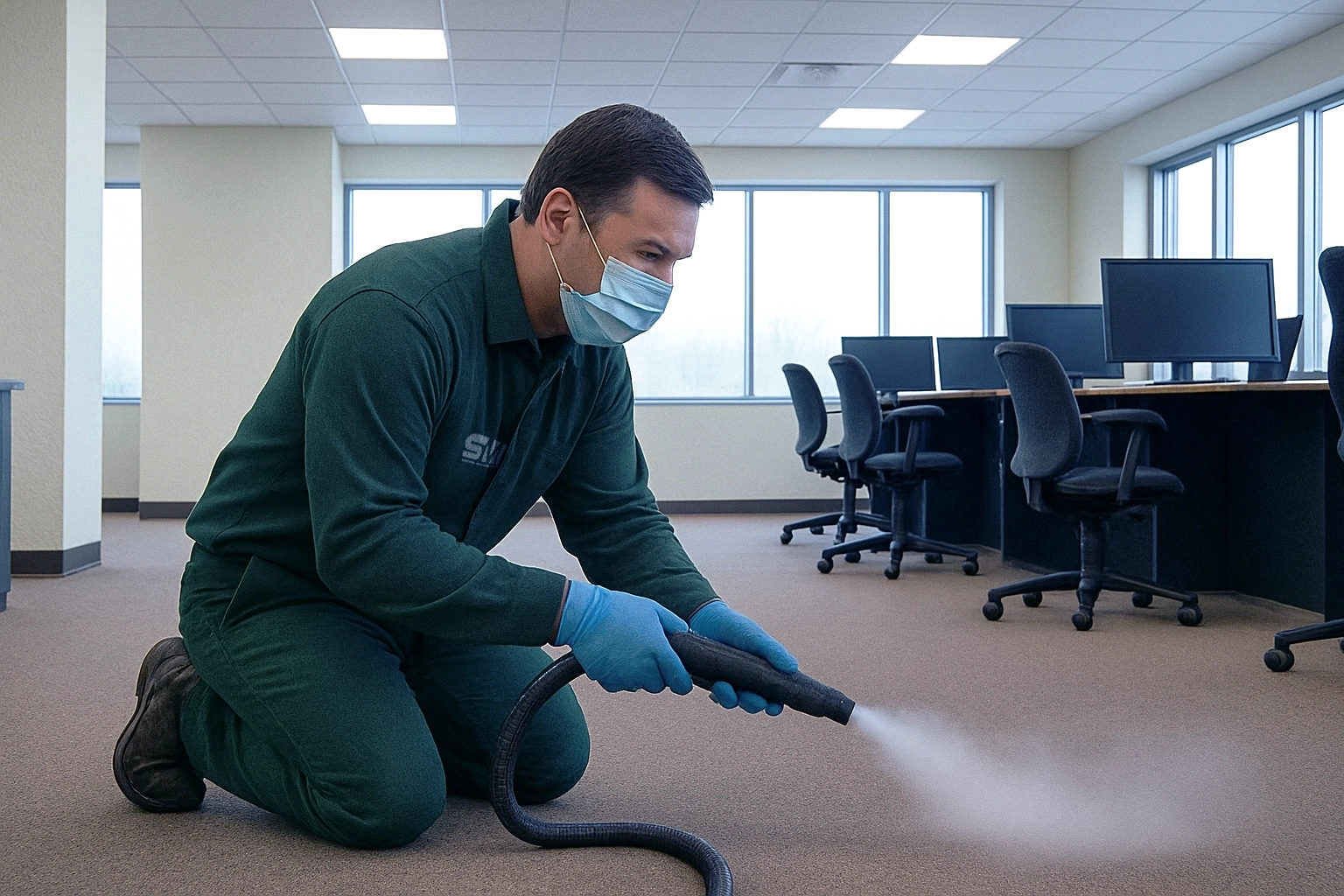
Odour Control
Our odor control service uses advanced techniques to eliminate even the most stubborn odors, restoring fresh and clean environments.

Common Odour Sources We Treat
Odours in commercial and industrial environments come from a wide range of sources. SMI's technicians are trained to identify and treat all of the following:
Cooking & Food Processing Odours
Commercial kitchens, food processing facilities, and restaurants accumulate grease and food odours in ventilation systems, walls, and floors over time. SMI's cleaning and odour control services address both the buildup and the resulting odour through a combination of deep cleaning and targeted treatment.
Industrial & Chemical Odours
Manufacturing facilities, warehouses, and processing plants generate chemical odours that can affect worker health, regulatory compliance, and neighbouring properties. SMI works with facility managers to identify odour sources and implement industrial-grade treatment protocols appropriate for occupied or operational environments.
Mould & Mildew
Mould growth in walls, ceilings, and HVAC systems produces a distinctive musty odour that signals active biological activity. Treating the odour without addressing the mould source is ineffective. SMI's Applied Microbial Remediation Technicians (AMRT) locate and remediate the mould itself, then treat the affected area to eliminate residual odour.
Pet & Organic Waste
Organic waste odours in commercial or multi-residential buildings - including pet odours in property management contexts - require enzyme-based treatments to fully break down the biological compounds responsible. Deodorizing sprays provide temporary relief; enzyme treatments eliminate the source.
Sewage & Biohazard Odours
Sewage backups, burst pipes, and biohazard incidents leave behind bacteria and organic compounds that produce powerful, persistent odours. SMI's remediation team combines physical cleanup with enzyme-based biological treatments to break down the organic matter causing the smell, rather than simply covering it.
Smoke & Fire Damage
Smoke particles embed deeply into porous materials - drywall, flooring, HVAC ductwork, and furnishings - and continue off-gassing long after the initial incident. Standard cleaning is rarely sufficient. SMI uses thermal fogging and hydroxyl generation to penetrate and neutralize smoke compounds at the molecular level, restoring the space to a breathable, odour-free condition.
Our Odour Treatment Methods
SMI uses a multi-method approach because no single treatment works for every odour type or environment. Our technicians assess each situation and apply the appropriate combination of the following:
Enzyme-Based Biological Treatment
Enzyme treatments use biological compounds to break down the organic matter - bacteria, proteins, waste - that produces odours at their source. This method is particularly effective for sewage, biohazard, pet, and food-related odours, and provides long-lasting results because it eliminates the source rather than masking it.
HEPA Air Scrubbing
HEPA air scrubbers filter airborne particulates - including mould spores, smoke particles, and other odour-causing matter - from the environment. They are used in combination with other treatments to improve air quality during and after the remediation process.
Hydroxyl Generation
Hydroxyl generators produce hydroxyl radicals that neutralize odour compounds on contact. Unlike ozone, hydroxyl treatments can be conducted in occupied spaces, making them suitable for environments that cannot be vacated for extended periods. This method is particularly effective for smoke, chemical, and biological odours.
Ozone Treatment
Ozone (O3) is a powerful oxidizing agent that reacts with and neutralizes odour-causing compounds in the air and on surfaces. It penetrates fabrics, wall cavities, and HVAC systems that physical cleaning cannot reach. Ozone treatments are conducted in unoccupied spaces and fully dissipate before re-entry - leaving no chemical residue behind.
Thermal Fogging
Thermal fogging disperses a fine deodorizing mist that penetrates porous surfaces and reaches areas that direct application cannot. It is especially effective following fire and smoke damage, where odour compounds have deeply embedded into building materials.
Industries & Environments We Serve
SMI has provided odour control services to a broad range of commercial and industrial clients throughout Toronto and the GTA since 1989. Our experience spans:
Service Area
SMI provides odour control services throughout Toronto and the Greater Toronto Area, including Mississauga, Brampton, Vaughan, Markham, Scarborough, Etobicoke, North York, Oakville, Burlington, and Hamilton. For large-scale industrial odour removal projects, we serve clients across Ontario - contact us to discuss your location and requirements.
Why Choose SMI for Odour Control
Businesses and property managers throughout Toronto and the GTA choose SMI for odour control because of our track record, methods, and response capability:
Frequently Asked Questions
What is the difference between odour masking and odour elimination?
Odour masking uses fragrances or deodorizing sprays to cover up a smell temporarily. The underlying cause remains, and the odour returns once the masking agent dissipates. Odour elimination targets the source - the bacteria, organic compounds, or chemical residue producing the smell - and neutralizes it permanently. SMI uses elimination methods exclusively; masking agents provide no lasting benefit in commercial or industrial environments.
How long does odour removal take?
Treatment time depends on the odour type, the size of the affected area, and the severity of the source. A standard ozone or hydroxyl treatment in a commercial space typically takes four to eight hours. Larger industrial projects or situations involving significant source contamination (sewage backups, fire damage) may require multiple visits over several days. SMI will provide a clear timeline following the initial on-site assessment.
Is ozone treatment safe for occupied buildings?
Ozone treatments must be conducted in unoccupied spaces - elevated ozone concentrations are harmful to people and animals. SMI schedules ozone treatments outside of business hours or during planned vacancies and confirms full dissipation before re-entry. Hydroxyl generation is the appropriate alternative for spaces that cannot be vacated, as it is safe for occupied environments.
Can you handle large-scale industrial odour removal in Ontario?
Yes. SMI has experience with industrial-scale odour control in manufacturing facilities, warehouses, and processing plants across Ontario. Industrial projects often involve specialized equipment, larger treatment volumes, and coordination with facility operations teams. Contact us to discuss your specific requirements and we will put together an appropriate scope of work.
Do you offer emergency odour control services in the GTA?
Yes. SMI provides 24/7 emergency response for odour situations arising from sewage backups, fire damage, biohazard incidents, and other urgent circumstances. Call 416-340-8765 any time to reach our emergency line.
What causes persistent odours in commercial buildings?
Persistent odours in commercial buildings typically stem from one or more of the following: mould or mildew growth in walls, ceilings, or HVAC systems; sewage or water damage that was not fully remediated; accumulated organic material in drains, grease traps, or waste areas; smoke or fire damage that penetrated building materials; or chemical off-gassing from industrial processes or materials. A professional assessment is the fastest way to identify the source and determine the right treatment.
How much does odour control service cost in Toronto?
Pricing depends on the odour type, the size of the affected area, the treatment methods required, and the accessibility of the space. SMI provides free on-site assessments and detailed quotes before any work begins. Call 416-340-8765 to schedule your assessment.
Request a Free Odour Control Assessment
If your property has a persistent odour problem, the right time to address it is now - odour sources rarely resolve on their own and typically worsen over time. Call SMI at 416-340-8765 to schedule a free on-site assessment. We serve Toronto and the GTA and are available 24/7 for emergency situations.
Contact UsLast updated: September 2026